
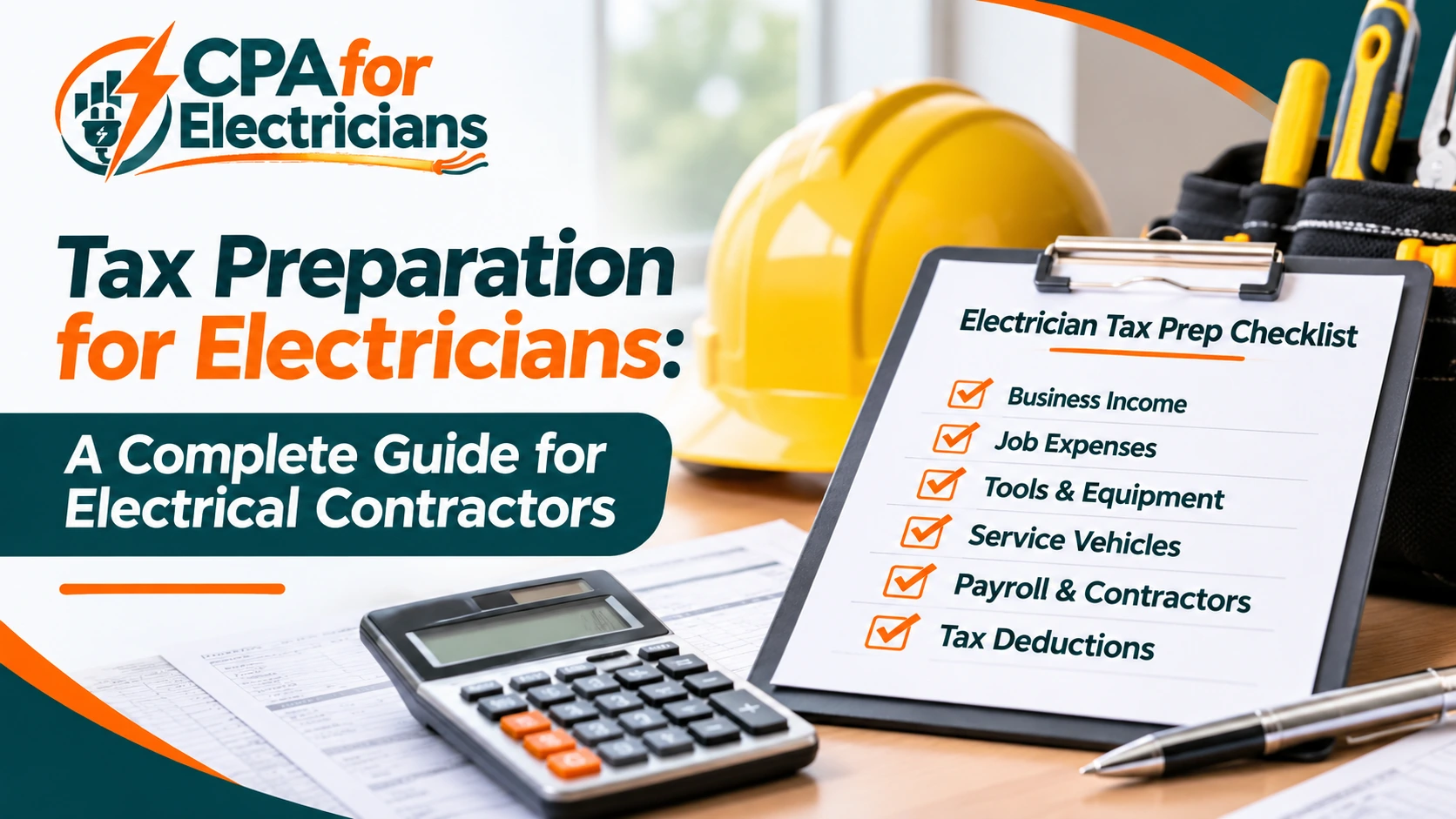
Tax preparation for electricians involves reporting business income, identifying eligible tax deductions, organizing payroll records, and filing the appropriate tax returns. Whether you are a self-employed electrician or operate an established electrical contracting company, proper tax preparation can help you manage tax obligations and avoid unnecessary filing mistakes.
Electrical contractors deal with a wide range of business expenses, including wiring, electrical panels, tools, service vehicles, employee wages, subcontractor payments, and equipment purchases. Maintaining accurate records of these expenses is essential when preparing business tax returns.
This guide explains how electricians can prepare for tax season, identify potential deductions, understand filing requirements, and develop better year-round tax strategies.
What Is Tax Preparation for Electricians?
Tax preparation is the process of collecting, reviewing, and organizing business records to prepare and file applicable federal, state, and local tax returns.
For electrical contractors, this includes reporting revenue from residential service calls, commercial installations, maintenance contracts, and other electrical projects while identifying eligible business expenses.
A specialized tax accountant can also review equipment purchases, business structure, payroll obligations, and depreciation opportunities to help ensure that the company’s tax returns accurately reflect its operations.
Professional tax planning and preparation services for electricians can help business owners approach tax season with better organization and fewer last-minute surprises.
What Taxes Do Electricians Have to Pay?
The taxes an electrician or electrical contracting company may owe depend on its business structure, location, taxable income, and whether it employs workers.
Income Tax
Federal income tax and applicable state income taxes based on taxable income and business structure.
Self-Employment Tax
Social Security and Medicare taxes that generally apply to qualifying net self-employment earnings.
Payroll Taxes
Applicable employment taxes, withholding, and reporting obligations for businesses with employees.
Electrical businesses may also have sales and use tax, franchise tax, or other state and local tax obligations. Requirements vary depending on where the business operates and the type of electrical work performed.
6 Essential Tax Preparation Steps for Electricians
Preparing your business records before tax season can make filing more efficient and help your accountant identify relevant tax considerations.
Organize Business Income
Review all revenue earned through electrical services, installations, and contracting work.
- Customer payments
- Commercial project revenue
- Cash and electronic payments
Review Business Expenses
Identify and categorize expenses associated with operating your electrical business.
- Electrical materials
- Tools and safety equipment
- Vehicles and operating costs
Reconcile Business Accounts
Compare accounting records with bank and credit card statements to identify discrepancies.
- Business bank statements
- Credit card transactions
- Missing or duplicate entries
Prepare Payroll Records
Review employee compensation and contractor payments before preparing tax returns.
- Employee wages
- Payroll tax records
- Applicable W-2 and 1099 forms
Review Equipment Purchases
Identify major business assets that may qualify for depreciation or other tax deductions.
- Electrical testing equipment
- Service trucks and vans
- Machinery and specialized tools
Work With a Tax Accountant
Review your business records and tax obligations with an experienced accounting professional.
- Business tax return preparation
- Eligible deduction review
- Year-round tax planning
Common Tax Deductions for Electricians
Electricians can generally deduct ordinary and necessary expenses associated with operating their businesses, subject to applicable IRS rules and limitations.
Keeping detailed receipts, invoices, mileage logs, and payment records can help support eligible deductions when preparing tax returns.
Electrical Business Expenses That May Be Deductible
Depending on your business activities and eligibility, deductible expenses may include:
Not every business purchase qualifies for an immediate deduction. Some expenses must be capitalized, depreciated, allocated between business and personal use, or treated according to inventory and accounting rules.
Tax Deductions for Electrical Tools, Equipment, and Vehicles
Electrical contractors frequently invest in service vans, utility trucks, ladders, power tools, testing instruments, and specialized installation equipment.
Depending on the asset and its business use, deductions may be available through regular depreciation, Section 179 expensing, or bonus depreciation.
Business vehicle expenses may also qualify under the standard mileage method or actual expense method, depending on eligibility and previous tax treatment.
Purchasing equipment does not automatically guarantee a full tax deduction. Eligibility can depend on the asset type, business-use percentage, placed-in-service date, and applicable tax rules. Review major purchases with your tax accountant before claiming deductions.
How Business Structure Affects Electrician Tax Returns
The way your electrical business is structured determines how income is reported, which tax returns are required, and how business owners may be taxed.
Sole Proprietorship
Independent electricians generally report business income and expenses on Schedule C with their individual tax return.
Limited Liability Company
Tax filing requirements depend on the number of owners and any federal tax classification elections.
S Corporation
Eligible businesses generally file Form 1120-S and must address reasonable compensation for shareholder-employees.
Partnerships and C corporations generally have separate filing requirements. Choosing a business structure should involve reviewing liability considerations, administrative costs, profitability, and potential tax implications.
Estimated Tax Payments for Self-Employed Electricians
Unlike employees who typically have income taxes withheld from their paychecks, self-employed electricians may need to make estimated tax payments throughout the year.
Individuals generally need to consider federal estimated tax payments if they expect to owe at least $1,000 after subtracting withholding and refundable credits, subject to applicable IRS rules.
Regularly reviewing business income and expenses can help electricians estimate their tax obligations and reduce the risk of underpayment penalties.
Visit the IRS estimated tax guidance for additional information about federal payment requirements.
Payroll and Subcontractor Tax Requirements
Electrical companies with employees must manage applicable payroll withholding, employment taxes, wage reporting, and tax deposits. Businesses that hire independent subcontractors may also have information reporting obligations.
Correct worker classification is particularly important for electrical contractors who work with apprentices, technicians, temporary workers, and subcontractors.
Professional payroll management services for electricians can help organize compensation records and support ongoing payroll tax compliance.
Why Accurate Bookkeeping Makes Tax Preparation Easier
Tax preparation becomes more difficult when business records are incomplete, expenses are incorrectly categorized, or bank accounts have not been reconciled.
Maintaining organized financial records throughout the year helps your accountant review taxable income, business expenses, equipment purchases, payroll activity, and other relevant transactions.
Ongoing bookkeeping services for electricians can help reduce year-end cleanup work and provide more reliable information for tax preparation.
Common Tax Mistakes Electrical Contractors Should Avoid
Many tax-related problems result from incomplete records, missed deadlines, or incorrect treatment of business expenses.
Reviewing your accounting records regularly and discussing major business decisions with a tax professional can help identify potential issues before filing deadlines.
Tax Preparation vs. Tax Planning for Electricians
Tax preparation and tax planning serve different purposes, but both are important for managing an electrical contracting business.
Tax Preparation
Focuses on accurately reporting completed business activity and preparing required tax returns.
- Review annual business income
- Identify eligible deductions
- Prepare applicable tax returns
- Review tax filing requirements
Tax Planning
Focuses on reviewing business decisions and potential tax opportunities throughout the year.
- Estimate future tax obligations
- Evaluate equipment investments
- Review business structure
- Plan income and expenses
Growing electrical companies may also benefit from fractional CFO services to improve financial forecasting, evaluate project profitability, and plan future business investments.
Why Work With a CPA Who Understands Electrical Contractors?
Electrical businesses have accounting and tax considerations that differ from many other industries. Job costs, material purchases, service vehicles, workforce expenses, progress billing, and equipment investments can all affect tax reporting.
A specialized CPA can help electricians organize business records, review eligible deductions, prepare applicable tax returns, and develop tax strategies based on their business activities.
Whether you operate independently or manage a growing electrical contracting company, professional tax support can help you stay organized and make informed business decisions throughout the year.
Tax Preparation for Electricians FAQs
What tax deductions can self-employed electricians claim?
Self-employed electricians may deduct eligible business expenses such as electrical materials, tools, business vehicle costs, insurance, licensing fees, advertising, and qualifying equipment purchases.
What tax forms do independent electricians need to file?
Sole proprietors generally report business income and expenses on Schedule C and may need Schedule SE. Additional forms depend on business structure, employees, and other tax circumstances.
Can electricians deduct the cost of a work truck?
Yes, eligible business-use vehicle expenses may be deductible. The deduction depends on business use, vehicle classification, depreciation rules, and the expense method selected.
Do self-employed electricians need to pay quarterly taxes?
Many self-employed electricians must make estimated tax payments throughout the year, depending on expected tax liability, withholding, credits, and applicable IRS requirements.
When should an electrical contractor hire a tax accountant?
Professional tax support can be beneficial when starting an electrical business, hiring employees, purchasing major equipment, changing business structure, or managing increasingly complex tax obligations.
Prepare Your Electrical Business for Tax Season
CPA for Electricians provides specialized tax planning, tax preparation, bookkeeping, and accounting services for independent electricians and electrical contracting companies. Get professional support tailored to your business.
Schedule a Consultation →